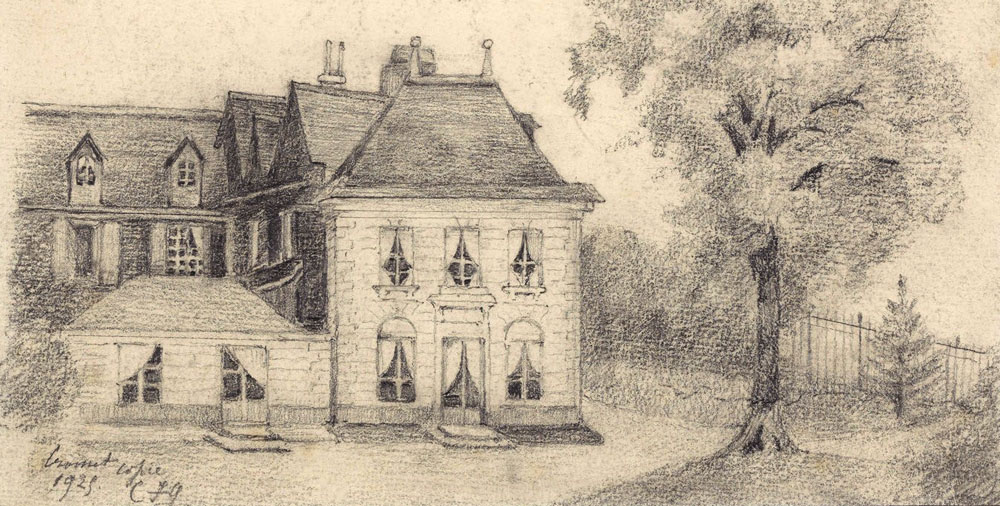
Flaubert’s Niece
In 1845 Gustave Flaubert was horrified to witness his sister Caroline’s wedding to Emile Hamard who had started unstable and ended up completely nuts. Flaubert had been at school with Hamard and had seen his deterioration after the death of a close brother and felt largely responsible for their introduction; and every following aftermath agony.
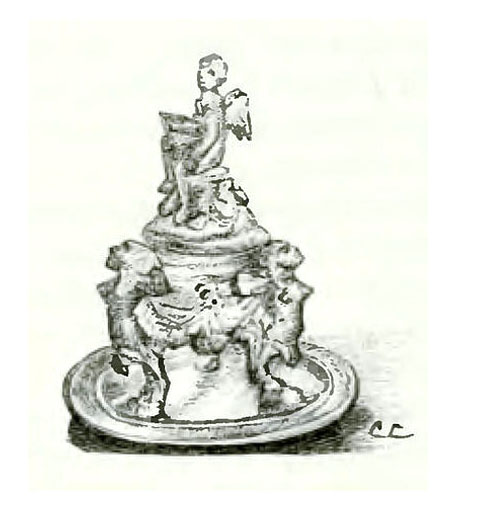 The Flauberts were a close and happy liberal bourgeois Rouennais family and Flaubert adored them all. His devoted father and local grandee Dr Achille-Cleophas died in January 1846 from complications caused by an infected cyst whose treatment was delayed by ‘bickering medical incompetants’ including Gustave’s brother? Then three months later Caroline, who had ignored strenuous advice against, died in childbirth while producing a daughter, also Caroline. An annus horribilis with rolling ramifications as Gustave who loved his sister dearly, felt singly responsible for the orphaned child and spoiled her rotten from thereonafter.
On turning seventeen in 1863 Caroline Flaubert fell in love with Earnest (du) Commanville, a struggling local timber merchant. On professional investigation exposed as two-generations illegitimate and not entitled to the surname ‘Commanville’ with or without the dubious ‘du’? Despite full knowledge of the craven imposture Caroline wed the scoundrel when she reached her majority in April 1864, undeterred by universal disapproval.
Within a year she left Rouen having acquired a townhouse on the Rue de Clichy better suiting her social ascendance, she also purchased a country estate and Dieppe chateau using family savings and complex lines of credit. She thence contrived to avoid Flaubert and his worried mother who had lovingly reared the girl since birth. She refused to visit, claiming incapacity due to ill health yet lived 85 years, blithely burying two husbands in the process.
To avoid the Franco-Prussian War Caroline and maid decamped to London in 1871. Where, sure the Prussians would win the war, she learned to speak der Deutsch. Returning to unmolested Dieppe once the seige of Paris had reached its terrible end. Her uncle was so truamatised by witnessed atrocities he never spoke to a German again.
The genuine, amiable, conscientious Gra-mère passed away in 1872 and left the family estate, Croisset to Caroline with Gustave allowed formal tenancy until his demise. Much to Caroline’s annoyance, as she commenced a campaign of petty harrassment; vetting his servants, cutting their pay, sacking old staff; complained of his smoking imported cigars. She reduced the heating and limited lighting until he only had one room in which to write. To sap his already fading fettle.
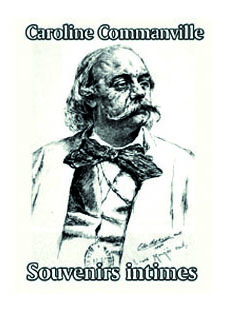 In 1874 Flaubert realised all his assets to imburse the Commanville family fund which was bankrupt due to the husband’s obssession to get rich quick by investing in multiple hair-brained schemes. In a confusing round of dicey transactions they used Flaubert’s capital as tangible collateral and kept the lot despite a banker’s contract guaranteeing monthly payments to Tonton Gustave. He received not one.
Flaubert, as principle shareholder, sold their Deauville saw mill to bolster the pot yet was kept uninformed of any proceedings; in offers, evaluations, dealings done. As this proved insufficient to dismiss the crowding, crowing creditors Gustave’s faithful Edmond Laporte moved all his capital into the fund – which Commanville reinvested to lose in a day.
Flaubert died without friends or family on May 8th 1880 watched over by his housekeeper. Caroline would later claim to have held him in her arms throughout his last hours.
The funeral was a fiasco. The Commanvilles assiduously worked the crowd, offering auctions of publishing deals and property profits. They sold Croisset where the house was demolished and replaced by an ugly clinker-block cardboard carton manufactory leaving a delapidated backyard shed; later elevated to ‘pavillion’ status and converted into a tourist museum for enthusiastic Flaubertian pilgrims.
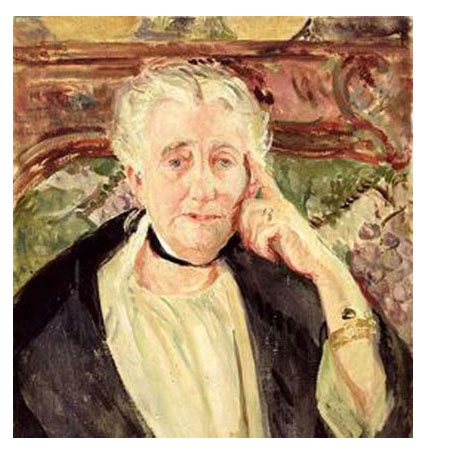 Caroline became a terrible painter, biographer, intime poetess and canon custodian. Three of her paintings appear above. Flaubert had over 2,000 letters filed in the house with at least as many in circulation. His niece exploited his literary remains for half a century – ending almost a millionairess by the time of her death in 1931. For your happy ending.