Correspondence between John Constable and John Fisher 1812 to 1829
JF 1812, ‘Your picture has been most criticised; disliked by bad judges, gaped at by no judges and admired by good ones.’
JC 1813, ‘My paintings will never be popular for they have no handling. But I do not see handling in nature.’
JF 1813, ‘Byron was pointed out to me last night. His poetry is most melancholy, but he has ability.’
JF 1814, ‘Your picture is one of the best here. I only like one better, Turner’s Frosty Morning. Like Bonaparte, great men are only ever beaten by a frost.’
JF 1819, ‘I want to see The Hay Wain in your room. How can one participate in a scene of fresh water and deep noon-day in the crowded copal atmosphere of the Exhibition? Which is always to me like a great pot of boiling varnish…’
 JC 1820, ’I am now going to pay court to the world. I have had experience enough to know that, if a man decries himself he will find people ready enough to take him at his word.’
JF 1821, ‘Cozens is here. Said some parts of your last picture were good. I told him if he had said all the parts were good it would be no compliment, unless the whole were good. Here is a man of the greatest abilities, who knows almost everything, and yet he is as poor a judge of a painting as if he had been without eyes.’
JF 1821, ‘Was a “grand critical party” objecting to your skies in Tinney’s picture. The truth comes out when these self-made connoisseurs begin to buy and collect for themselves. Went fishing in the New Forest in a deep broad river with mills, roaring back waters, withy beds etc. Caught two pike, up to my middle in watery meadows, ate my dinner under a willow; as happy as a careless boy.’
JC 1821. ‘I don’t consider myself at work unless I am before a six-foot canvas. I have done a good deal of skying. Cannot name a class of landscape in which the sky is not the keynote, the standard of scale and the chief organ of sentiment. The sky is the source of light in nature and governs everything, even our common observations on the daily weather are altogether suggested by it. Wish I was on your fishing excursion. The sound of water escaping from mill-dams, willows, old rotten planks, slimy posts, brickworks… I love such things. As long as I do paint, I shall never cease to paint such places.’
JC 1821, ‘Recalling Arundel. Does the cathedral look beautiful among the golden foliage? Its solitary grey must sparkle in it.’
JF 1821, ‘Our cathedral looks well this weather, but not so much relieved by warm tints as you’d imagine. Owing to seasonal moisture and the rapid decomposition of vegetation there is a constant humid halo which makes the shadows blue at all hours, and gives the landscape a cold tone.’
 JC 1822, ‘Had an offer of £70 for my Hay Wain without the frame for an exhibition in Paris. Might promote my fame, but it is property to my family.’
JF 1822, ‘No man had ever more than one conception. Milton emptied his mind into his first book of Paradise Lost, all the rest is transcript of self. The Odyssey is a repetition of the Iliad. When you have seen one Claude, you have seen all. I can think of no exception but Shakespeare; he is always varied, never mannered.’
JC 1823, ‘ The Frenchman is back, wants The Hay Cart and The Bridge as a job lot. My success in life seems pretty certain, but no man can get much by study, and the labour of his own hands.’
JF 1823, ‘Let your Hay Cart go to Paris. The stupid English public, which has no judgment of its own, will begin to think there is something in you if the French make your works national property. Men do not purchase pictures because they admire them, but because others covet them.’
JF 1824, ‘ I congratulate your name in the newspaper. They cannot give fame, but they attend on her.’
JC 1824, ‘Have agreed on £250 with the Frenchman, and gave a small Yarmouth into the bargain.’
JF 1825, ‘You once said,”A man is always growing, either upwards or downwards.” I have been trying to grow upwards since we parted.’
JC 1825, ‘Arrowsmith wrote flattering from Paris. Collins called, says I am a great man there. I have no wish to visit France.’
JF 1825, ‘Riding from Bath by instinct found myself at a mill surrounded by wiers, back-waters, nets and willows; with a smell of weeds, flowing water and flour in my nostrils; brought you to mind.’
JF 1826, ‘Bring your poor boy down by easy stages, leave him here to take his chances. Write for anything you want of money matters. Get rid of anxiety, it hurts the stomach more than arsenic. It’s said of generals who have failed; were looking too narrowly into details. You want a staff just at present. Lean upon me hard.’
JC 1827, ‘Your loaned White Horse did me great credit at Lisle. A gold medal was voted to me, which I received yesterday.’
JF 1827, ‘The White Horse arrived back from the continent on Friday. Looks very placid, on my wall.’
JF 1828, ‘Poor Coxe died recently, of old age. His domestics never left him. A silent but strong compliment.’
JC 1829, ‘My nomination to The Academy was delayed till I am known and do not want it.’
JF 1829, ‘ My dear Constable, although I fully expected the event, your notice of becoming an Academician gave me the greatest pleasue. Since my judgment was embarked on the same boat as your success.’
JC 1829, ‘My dear Fisher, I know not if the landscapes I now offer to your notice will add to the esteem in which you have always been so kind as to hold me as a painter; I shall dedicate them to you, relying on that affection which you have invariably extended to me under every circumstance.’
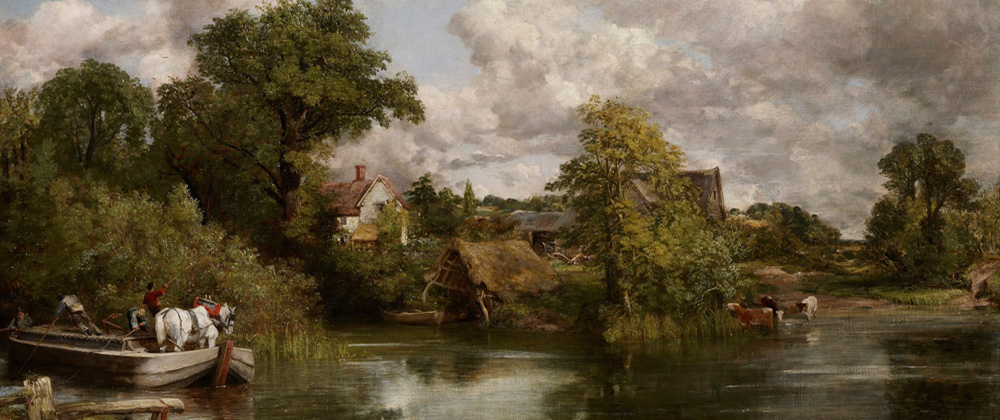
John Constable held a cute but courtly correspondence with Archdeacon John Fisher for twenty odd years. Fisher was an avid patron, friend and mentor through several of Constable’s artistic and personal tribulations. The header image of The White Horse was bought by Fisher while Constable was still unpopular in England and reluctantly loaned to prescient European organisations who saw the genius in Constable’s work. The last letter Constable wrote, which contained the excerpt above, went unread; as Fisher had died the day it was posted, or so the legend goes.
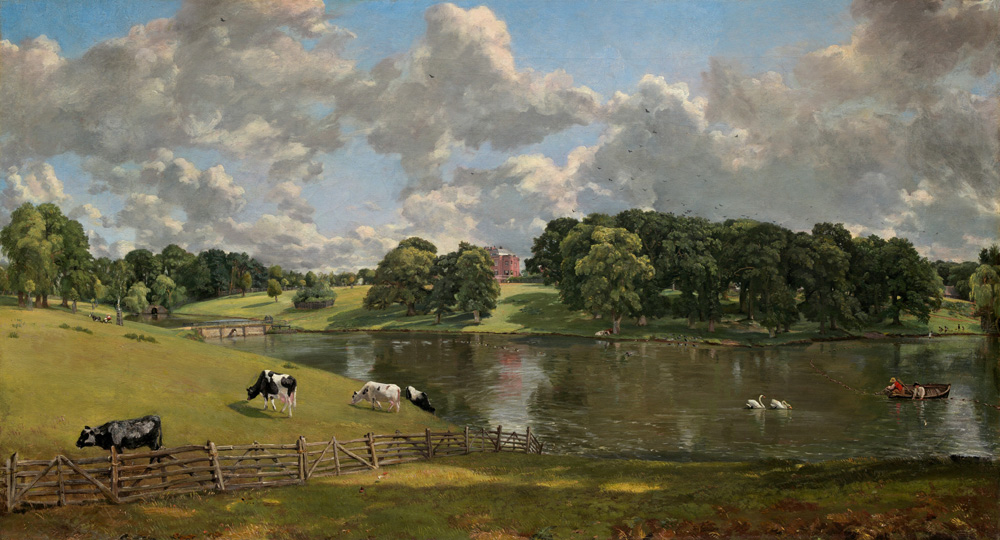
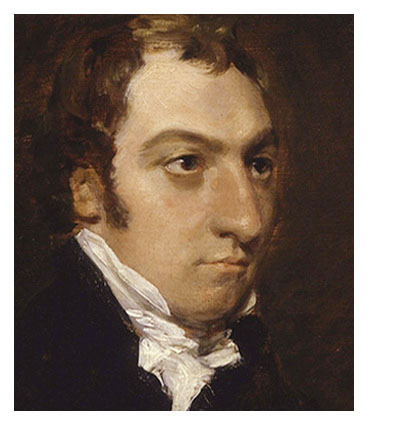
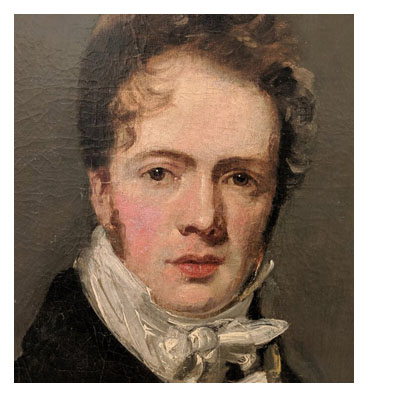
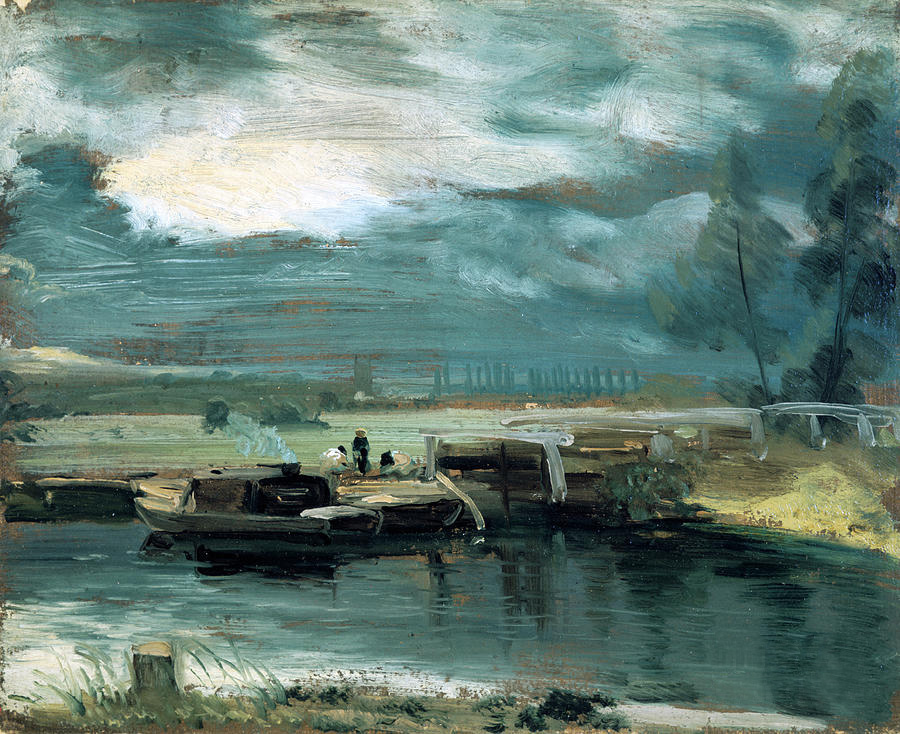
The header image is of The White Horse, 1818. The first portrait is of John Fisher, 1816 the second of John Constable, 1807. The middle image is a sketch entitled Barges on the Stour at Flatford Lock, 1811. The lower image is of Wivenhoe Park, Essex. 1816. The featured image is The Full-scale Study for the Hay Wain, 1821. All were painted by John Constable.